
AI Attribution Engines: How Automation Transforms Marketing Measurement


Marketing teams spend millions on campaigns but can't definitively say which efforts actually drive revenue. Traditional attribution models like first-touch and last-touch, are governed by arbitrary rules that ignore the complexity, fluidity, and nuance of modern B2B buyer’s journeys across dozens of touchpoints and multiple stakeholders.
AI attribution engines use machine learning to analyze every customer interaction and assign credit based on actual influence, not predetermined formulas. This article explores how automation transforms marketing measurement from manual reporting exercises into real-time intelligence systems that optimize budget allocation and reveal which activities genuinely create pipeline.
Why Traditional Attribution Models Fail Modern Marketing Teams
Traditional attribution models use static rules that can't adapt to how buyers actually behave. First-touch models credit only the initial interaction, while last-touch models give all credit to the final touchpoint before conversion. Both approaches ignore the dozens or hundreds of interactions that happen in between. In fact, our own research found it now takes the average B2B company 71 touchpoints just to generate an MQL or marketing qualified lead—a 31% increase from 2023.
This means you're making budget decisions based on incomplete information.
The problem gets worse when your data lives in separate systems—the average B2B organization uses 12-20 tools in their MarTech stack. Your CRM tracks sales conversations, your marketing automation platform captures email clicks, and your analytics tool shows website visits—but none of them connect the dots to paint a complete picture. You might see that someone downloaded a whitepaper before becoming a customer, but you miss the blog posts they read anonymously three months earlier or the webinar a colleague attended.
Anonymous visitors create a massive blind spot in traditional models. Most B2B buyers spend weeks researching your product before they fill out a form, yet traditional attribution can't connect early-stage browsing to eventual conversions. You're essentially flying blind through the most important part of the buyer journey.
Manual reporting creates another bottleneck. Every time someone asks "which campaigns drove pipeline last quarter?," a person has to export data from five different tools, clean up the duplicates, and build a spreadsheet. By the time you have an answer, the quarter is over and the insight doesn't help you anymore.
What AI Attribution Engines Do Differently
AI attribution engines use machine learning to analyze every customer touchpoint and assign credit based on actual influence. Instead of following predetermined rules like "give 40% to first touch and 60% to last touch," the system learns from your data to discover which interactions genuinely move prospects toward conversion. HockeyStack’s AI attribution powered by Odin, its intelligent analytics engine; builds on first‑touch, last‑touch, linear, time‑decay, position‑based, and custom models to identify causal impact and incremental lift, revealing how each channel and touchpoint contributes to pipeline and revenue.
The automation piece is just as important as the intelligence. Once you set up the system, it continuously ingests data from all your platforms and updates attribution scores without manual work. When a high-value account visits your pricing page after reading three blog posts, the engine immediately recognizes this pattern and adjusts its calculations.
Here's what changes when you move from traditional to AI attribution:
- Real-time updates: Attribution scores refresh as new activity happens, not days later
- Complete visibility: The system tracks anonymous browsing, known contacts, and post-sale product usage
- Adaptive learning: Models improve as they process more data, without manual reconfiguration
Traditional models tell you what happened. AI attribution tells you what's working and why.
How AI-Powered Attribution Transforms Data Into Intelligence
True AI-powered attribution doesn’t mean generating more data to detangle. It’s about baking deep visibility and proactivity into the foundation of your GTM motion across every channel and touchpoint. Key capabilities include:
Machine Learning Models That Drive Attribution
Machine learning models examine thousands of buyer journeys to identify patterns in successful conversions. The algorithms note which sequences of touchpoints preceded closed-won deals and which combinations of activities correlate with drop-off. Over time, the model learns to predict and identify which current prospects are following high-intent paths.
This approach adapts automatically. When you launch a new content series or shift your paid media strategy, the model incorporates the new data and adjusts its predictions. You're not stuck with attribution logic that was relevant six months ago but doesn't reflect your current go-to-market motion.
Real-Time Processing vs Batch Analytics
Batch analytics process data once per day or once per week, which means your insights are always backward-looking. Real-time processing analyzes data as it arrives, updating attribution scores within seconds of new activity. The difference matters because marketing teams make dozens of decisions daily about where to focus effort and budget.
When you can see that a campaign just drove three enterprise accounts to your demo page in the last hour, you can scale it immediately. Batch processing would hide this signal until tomorrow's report, after the moment passed.
Unified Identity Resolution
Identity resolution connects anonymous website visitors to known contacts and links multiple contacts within the same buying committee. The system uses behavioral signals and matching algorithms to build complete profiles. A prospect might visit your site anonymously on mobile, return on desktop and fill out a form, then have colleagues from the same company engage with your content—the engine recognizes all of this as related activity within a single account journey.
This unified view reveals how B2B buying actually works. Instead of seeing isolated touchpoints, you understand how different stakeholders research independently before converging on a decision. This insight changes how you think about content strategy and budget allocation.
Core Components of AI Attribution Systems
AI attribution systems enable teams to deeply understand and effectively respond to real-time buyer behavior by combining three core components:
Data Foundation and Architecture
Without clean, connected data, attribution models produce unreliable results because they're working with incomplete inputs. AI attribution starts with a unified data layer that pulls information from every system in your go-to-market stack. This foundation normalizes formats, removes duplicate records, and resolves conflicting values automatically.
The architecture handles both structured data like CRM fields and unstructured data like web session behavior. It captures CRM activity, marketing engagement, website behavior, and product signals—then connects all of it into a single timeline for each account, breaking down buyer’s journeys into a series of measurable steps.
Enterprise implementations often require integrating custom Salesforce objects that track industry-specific processes. A robust data foundation accommodates unique data structures without requiring changes across your entire tech stack.
Intelligent Attribution Modeling
The modeling layer applies machine learning to your unified data to calculate influence scores for each touchpoint. The algorithms consider timing, sequence, and the specific combination of activities that preceded conversions. A webinar attended three days before a demo request receives different weighting than the same webinar attended three months earlier.
Algorithmic attribution goes beyond simple correlation to identify causal relationships. The system runs counterfactual analysis, essentially asking "would this deal have closed without this touchpoint?" This approach surfaces the true incremental value of each marketing activity rather than just crediting whatever happened to occur before conversion.
Automated Optimization Engines
Advanced AI attribution systems don't just measure—they recommend actions. The optimization engine analyzes attribution data to identify underperforming channels, suggest budget reallocation, and flag accounts showing high-intent signals. Instead of presenting dashboards that require interpretation, it surfaces specific suggestions based on real buyer behavior: pause this campaign, increase spend on that channel, prioritize outreach to certain accounts.
This automation transforms attribution from an analytics exercise into an operational advantage. Your team spends less time analyzing data and more time executing the strategies that attribution insights reveal.
Types of AI Attribution Models for Enterprise Marketing
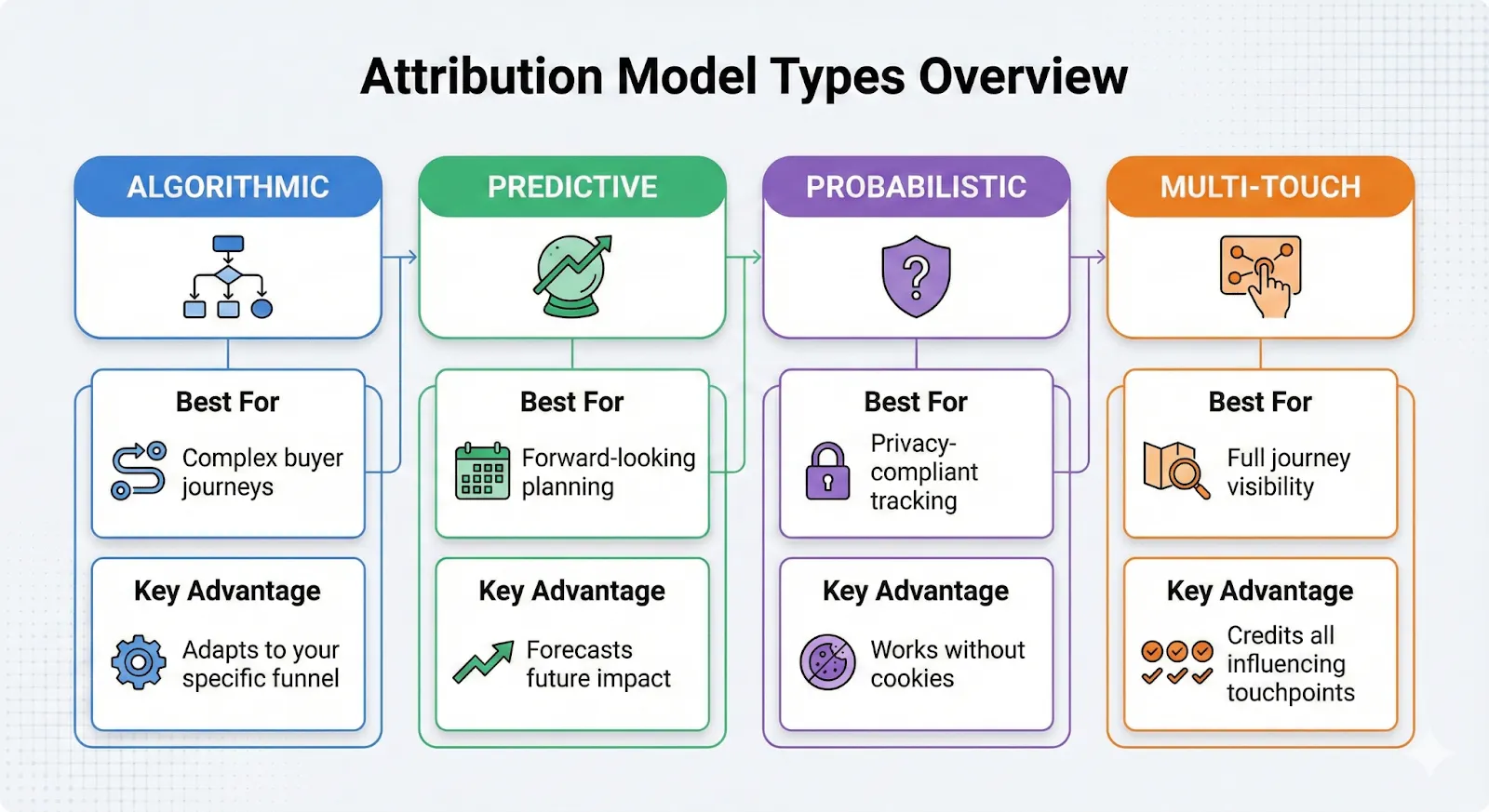
Image: AI attribution models combine algorithmic, predictive, probabilistic, and multi-touch data capture and analysis to effectively measure and optimize complex buyer’s journeys.
Algorithmic Attribution
Algorithmic attribution applies rule-based machine learning that assigns credit according to logic you define, enhanced by AI pattern recognition. You might specify that first-touch interactions receive baseline credit while mid-funnel content gets weighted based on engagement depth. The AI component learns which specific assets and channels perform best within your framework.
This approach works well when you have strong hypotheses about your buyer’s journey but want AI to optimize the details. Marketing teams often start here because it balances control with intelligence.
Predictive Attribution
Predictive models forecast which current touchpoints will likely drive future conversions based on historical patterns. Instead of only looking backward at closed deals, the system identifies prospects following high-conversion paths and predicts their likelihood to buy.
The predictive approach becomes particularly valuable for long sales cycles where you can't wait months to learn if a campaign actually worked. Early signals let you adjust strategy in-flight rather than after the quarter ends.
Probabilistic Attribution
Probabilistic modeling uses statistical inference to assign credit when direct tracking isn't possible. As third-party cookies disappear and tracking becomes more restricted, probabilistic methods estimate touchpoint influence based on aggregate patterns and cohort behavior. The system might observe that accounts engaging with a particular content series convert at higher rates, then probabilistically attribute value even when individual tracking is incomplete.
This approach maintains attribution accuracy without requiring invasive tracking that violates privacy regulations.
Multi-Touch Attribution
AI-enhanced multi-touch models dynamically weight every touchpoint based on its actual contribution rather than using static position-based rules. Traditional multi-touch attribution might give 40% credit to first touch and 40% to last touch with the remainder distributed evenly—but AI multi-touch learns that for your business, mid-funnel case studies actually drive more influence than first-touch blog posts.
Start Building Better Marketing Measurement Systems
Modern attribution requires three foundational elements: unified data across all GTM systems, real-time processing infrastructure, and AI-powered analysis that surfaces actionable insights automatically. Building this infrastructure internally typically takes 12-18 months of engineering effort, plus ongoing maintenance and constant adaptation as your tech stack evolves.
The shift from traditional to AI attribution isn't just about better measurement—it's about transforming marketing from a cost center into a revenue engine with clear ROI data. When you can show which campaigns drive pipeline and at what cost, budget conversations change from politics to math.
HockeyStack's AI attribution engine provides this complete infrastructure, unifying your GTM data and delivering real-time insights without requiring you to build and maintain complex data pipelines. [Book a demo](https://www.hockeystack.com/contact-sales) to see how it works.
Frequently Asked Questions About AI Attribution Engines
How much does implementing AI attribution cost compared to building in-house?
AI attribution platforms typically cost less than maintaining internal builds when accounting for engineering time, infrastructure, and ongoing maintenance. Internal builds often require 2-3 full-time engineers plus data infrastructure costs that exceed $200K annually before you've built anything close to commercial platform capabilities.
Can AI attribution handle complex B2B sales cycles with multiple stakeholders?
AI attribution engines track individual stakeholder activity across accounts and connect touchpoints from multiple decision-makers. The system identifies when different people from the same company engage with your content and recognizes all of it as coordinated research within a single buying process.
How do attribution engines manage enterprise account hierarchies?
Modern AI attribution systems handle both heterogeneous and homogeneous account structures, showing individual subsidiary journeys while rolling up insights at the parent level. You can see how different divisions of the same enterprise research independently while still understanding the consolidated influence across the entire organization.
What's the typical timeline to see ROI from AI attribution?
Most organizations see initial insights within weeks of implementation, with full ROI realized as teams shift budgets based on attribution data. The fastest returns come from stopping spend on channels that attribution reveals are receiving credit they don't deserve—often freeing up 15-20% of budget to reallocate toward higher-performing tactics.
Do AI attribution platforms work with custom CRM objects?
Enterprise-grade attribution engines integrate with custom Salesforce objects and fields, ensuring all relevant business data flows into attribution models without requiring schema changes. This capability matters for organizations with specialized sales processes that don't fit standard CRM configurations.
How can AI attribution remain accurate without third-party cookies?
AI attribution uses first-party data, server-side tracking, account-level identification, and probabilistic matching to maintain accuracy in cookieless environments. The shift away from cookies actually strengthens attribution by forcing systems to rely on owned data and direct relationships rather than third-party signals that were always incomplete.