Durable Execution: Why Your Agents Fail Silently


Durable Execution: Why Your Agents Fail Silently

Why GTM agent execution should mirror the rest of your revenue stack, and what that actually means.
In one line: Other tools treat agent runs as fire-and-forget requests. We treat every run as a durable workflow so you get resume, cancel, and a full audit trail.
The industry is focused on models and prompts. Far less attention goes to how the run actually runs: what happens when it crashes at step four of seven, whether you can cancel it mid-flight, whether anyone can tell you what it did last Tuesday. That gap matters.
The Bar Nobody's Holding Agents To
What kills production agents isn't the model. It's timeouts with no save point, retries from zero, and cancellations that don’t stick. All with zero record of what happened.
The bar is durable execution: checkpointing and an audit trail you can actually query. Most agents don't clear that bar. They treat every run as a long-lived request or a fire-and-forget job.
One-Shot vs. Durable
Here's what actually happens under the hood.
One-shot. The run is a single unit of work. If the process crashes or times out, nothing is persisted about what already completed. Retry means starting over and you risk duplicate side effects. The only alternative is to cancel. You can kill the process but the next trigger spins up a new one. There's no single run record and an audit means digging through logs.
Durable workflow. The run has step-level checkpointing. An execution engine persists each step before moving to the next. Retry resumes from the last completed step, not from the beginning. Runs are keyed so the same logical run can't execute twice. Cancellation is an event that gets persisted, so a cancelled run stays cancelled even if something tries to retry it. Timeouts cap how long a run can live, and every run is written to storage with its full execution history.
One-shot has no checkpoints, so everything is all-or-nothing. Durable gives you the controls you'd expect from any production system.
Why This Matters for GTM
It's Monday morning. Your ops team set up an overnight agent to generate close plans for 40 open deals before the weekly pipeline review. The run died at deal 12. Nobody knows.
On one-shot, your VP of Sales opens the dashboard expecting 40 close plans. She sees 12. The other 28 reps have nothing. Some of them have calls in two hours. She Slacks your RevOps lead: "Did the agent run?" He checks. There's no run record, just a generic timeout error in the logs. He doesn't know which 12 deals got plans, whether those plans wrote to the CRM correctly, or whether re-triggering the agent will double-write the first 12. So he tells the reps to prep manually. The agent might as well not exist.
On durable, the run checkpointed after each batch. The run record shows it completed through deal 12, failed on 13 with a CRM timeout, and stopped. Your RevOps lead sees this in the dashboard. He retriggers. The retry picks up at deal 13. The 12 completed plans are untouched. By 8:30am, all 40 plans are in. Nobody prepped manually.
Here we have the same agent with the same trigger but the difference is whether the execution engine underneath it was actually built for production.
How HockeyStack Runs Your Agents
Every agent run is executed as a durable workflow, not a one-shot request. We break each run into phases, checkpoint after each one, and write a run record so you can see exactly what happened.
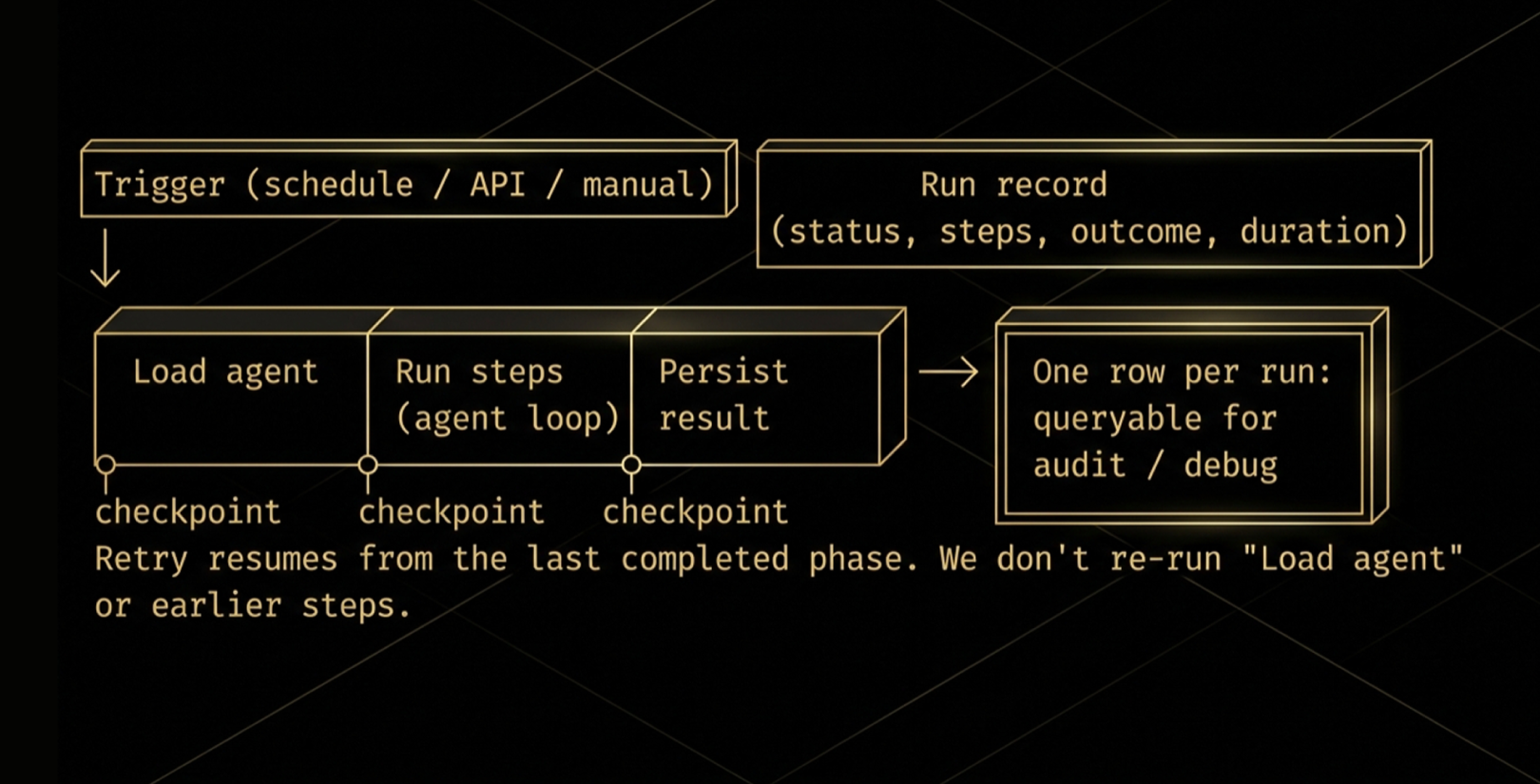
Cancelled runs never retry. Run keying uses a composite key (trigger type, agent, schedule timestamp, version) so the same logical run can't execute twice, and duplicate events within a short window collapse to one run. Timeouts cap total duration so nothing hangs.
On completion, failure, or cancel, we write a run record and per-step records: what each step did, what tools it called, how long it took. The audit trail is a queryable record.

The Bar for Production GTM AI
Enterprise AI that touches revenue should be held to the same infrastructure standard as the rest of your stack. The agents prepping your reps, scoring your pipeline, and building your close plans should be agents you can trust, resume, cancel, and explain. If the execution layer underneath them can't do that, the model doesn't matter.
A one-shot request fails silently. A durable workflow runs like infrastructure with the reliability GTM actually demands.
Mastering ABM Attribution: A Complete Guide for B2B Marketers
Implement ABM attribution the right way. This guide helps B2B marketers navigate common challenges and achieve accurate measurement.

Ready to see HockeyStack in action?
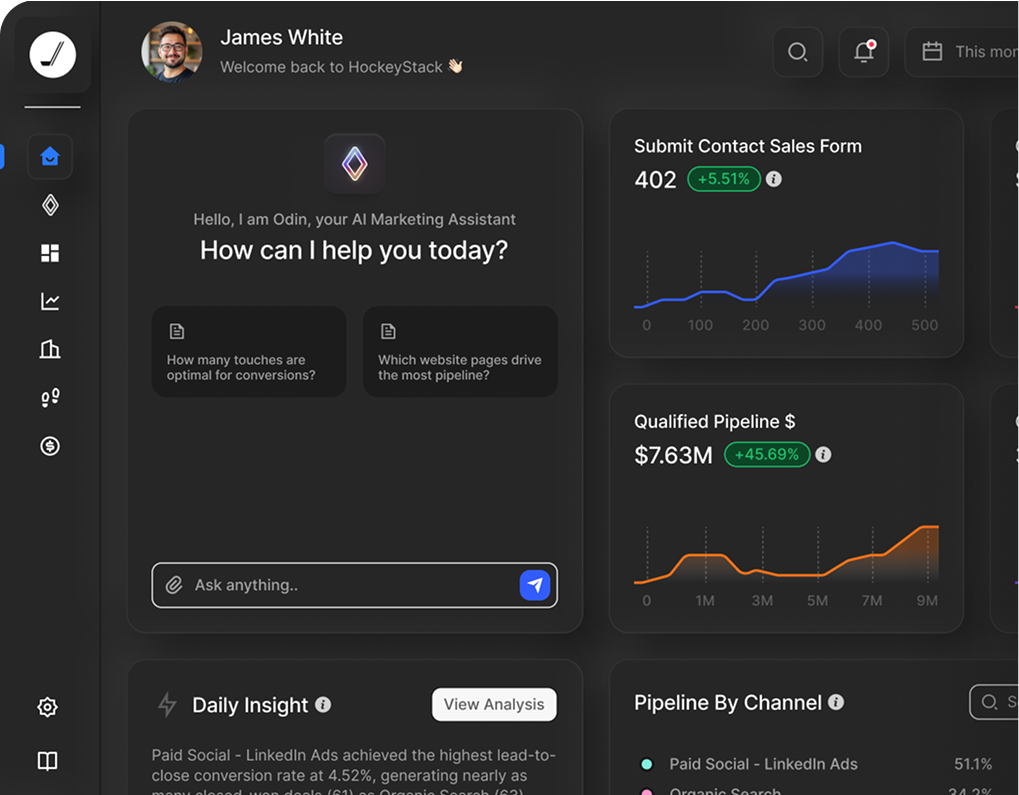
HockeyStack turns all of your online and offline GTM data into visual buyer journeys and dashboards, AI-powered recommendations, and the industry’s best-performing account and lead scoring.
Ready to See HockeyStack in Action?
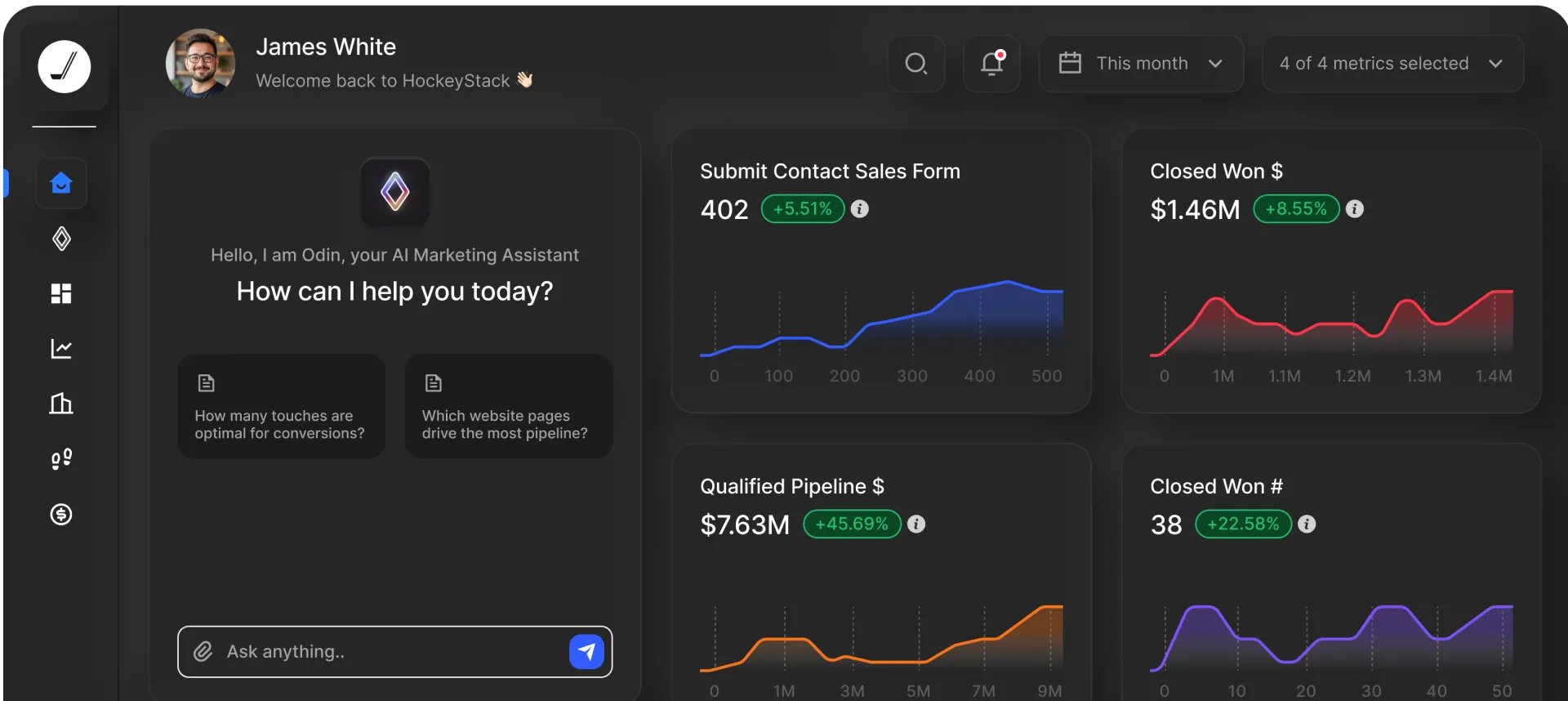
HockeyStack turns all of your online and offline GTM data into visual buyer journeys and dashboards, AI-powered recommendations, and the industry’s best-performing account and lead scoring.